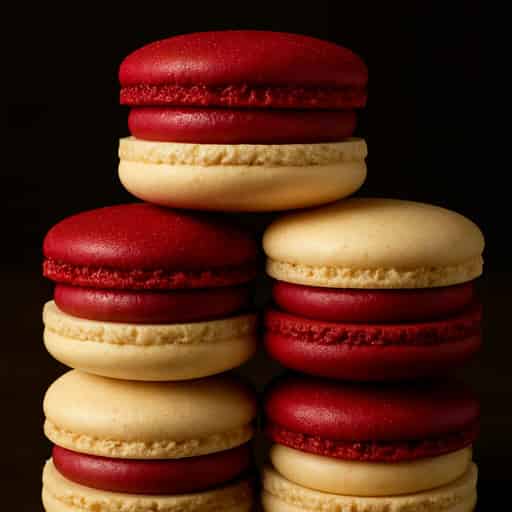
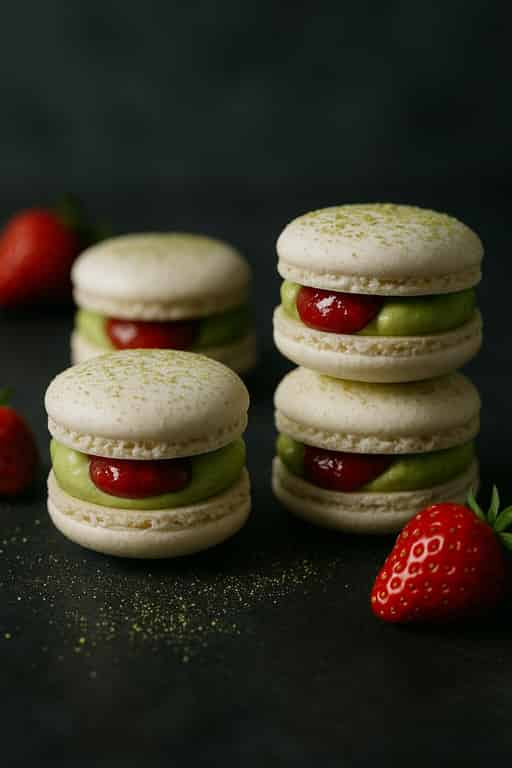
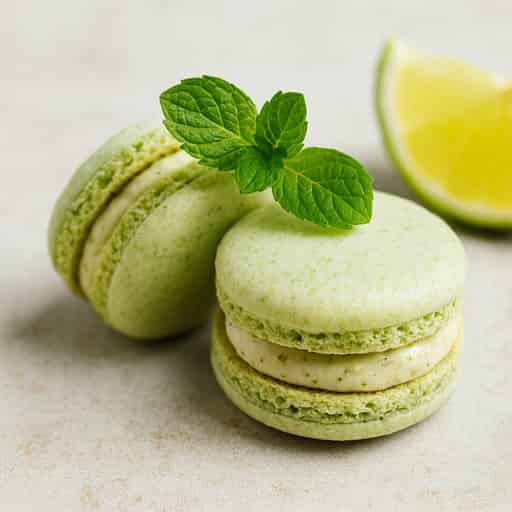
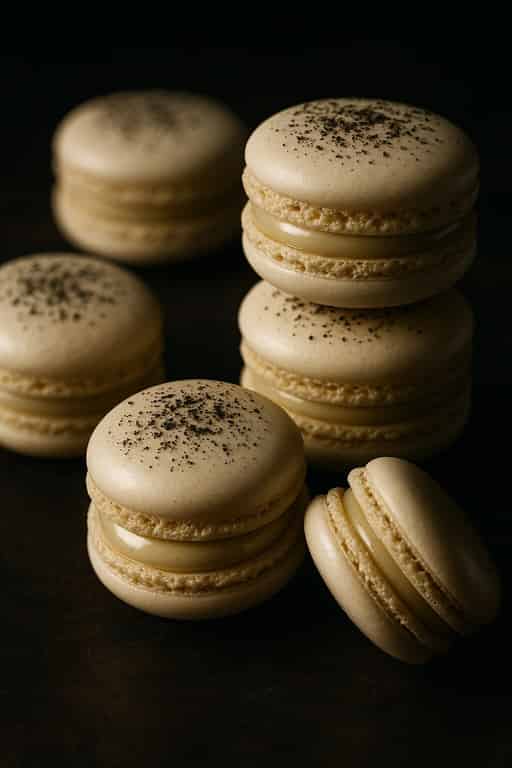
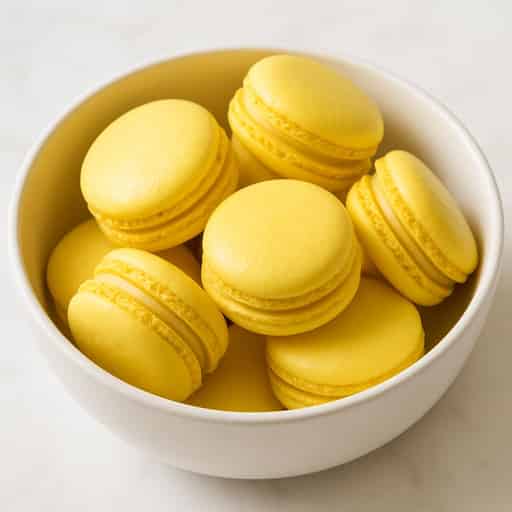
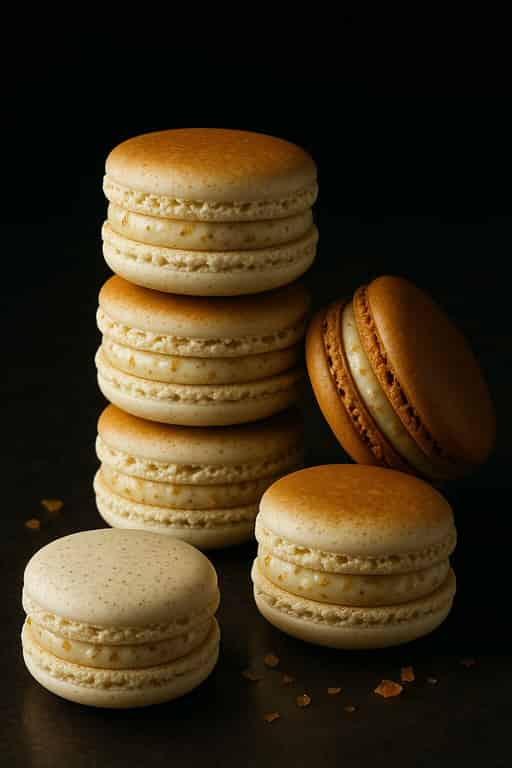
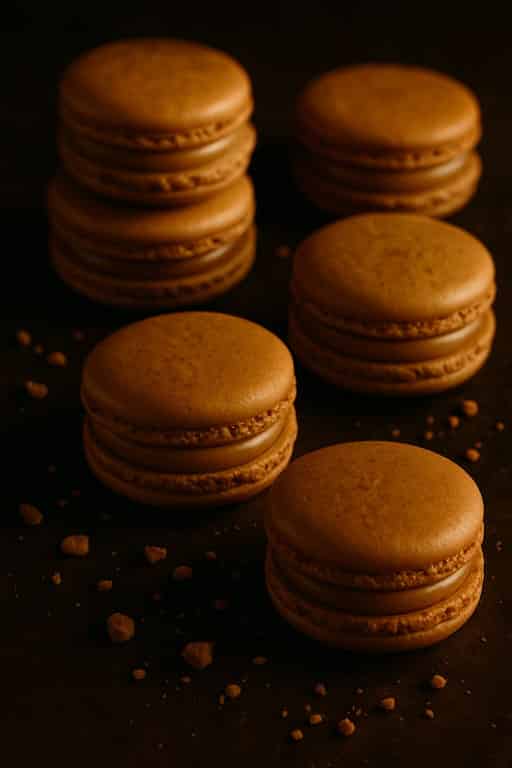
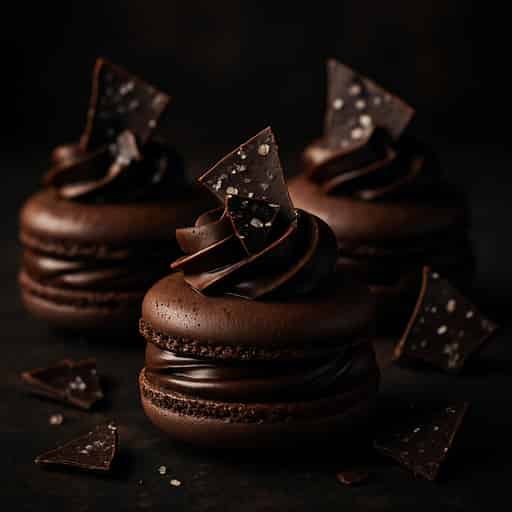
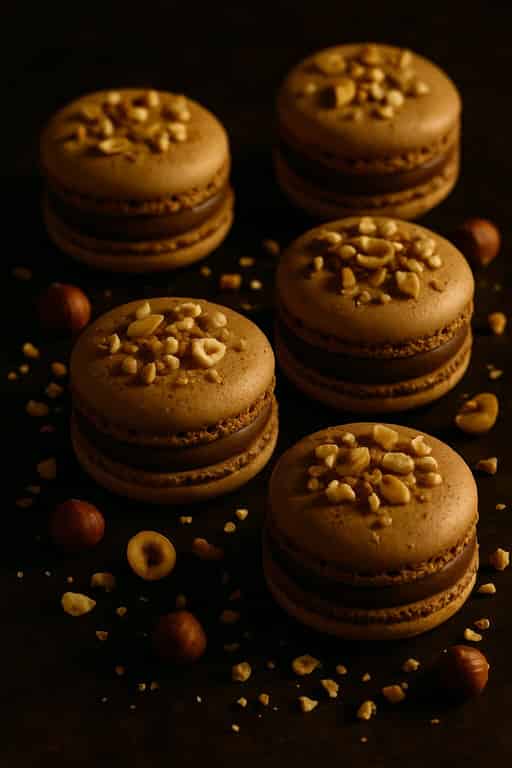
Raspberry chocolate macarons with cocoa-almond shells and a dark chocolate raspberry ganache. A detailed French macaron recipe for home bakers.
Prep time
1 hr 30 min
Cook time
15 min
Total time
26 hr 30 min
Servings
20
Time Plan
1 hr 30 min active · 26 hr 30 min total
- Make, pipe, rest, bake, and cool the shells1 hr 15 min
- Make and chill the ganache1 hr
- Fill the macarons15 min
- Mature the filled macarons24 hr
Recipe Snapshot
DifficultyAdvanced
MealDessert
Freezer FriendlyYes
CuisineFrench
Chef's Tips
Use a kitchen scale for the shell ingredients; small volume differences affect macaron batter.
Rest the piped shells until a dry skin forms before baking to encourage an even foot.
Blend the ganache only after the butter is incorporated so it stays glossy and smooth.
Mature the filled macarons for 24 hours, then bring them to room temperature before serving.
Tools Used
Stand Mixer(opens in a new tab)Fine-mesh Sieve(opens in a new tab)Kitchen Scale(opens in a new tab)Piping Bag With Round TipBaking Sheets(opens in a new tab)Parchment Paper(opens in a new tab)OvenKitchen ThermometerImmersion Blender(opens in a new tab)
We use affiliate links, which may earn us a small commission at no extra cost to you.
Ingredients
Ingredients
Servings
20 servings1×
Scale
Ingredient amounts update instantly.
Macaron Shells
Chocolate Raspberry Ganache
Assembly
Instructions
Make Macaron Shells
- 1
Sift the almond flour, icing sugar, and cocoa powder together twice.
- 2
In a clean bowl, whip the egg whites until foamy. Gradually add the caster sugar and beat to stiff, glossy peaks. Add the gel colouring, if using, near the end.
- 3
Fold the dry mixture into the meringue until the batter flows in thick ribbons and the surface settles slowly after each fold.
- 4
Transfer the batter to a piping bag with a round tip and pipe 3.5 cm rounds on parchment-lined baking sheets.
- 5
Tap the baking sheets firmly to release air bubbles. Rest the shells for about 30 minutes, or until a dry skin forms.
- 6
Bake at 150°C / 302°F for 15 minutes, rotating the sheets if needed. Cool the shells completely before removing them from the parchment.
Prepare Chocolate Raspberry Ganache
- 1
Blend and strain the raspberries to make about 120 g smooth purée.
- 2
Heat the raspberry purée to a simmer. Pour it over the chopped chocolate in three additions, stirring from the centre out after each addition.
- 3
Let the ganache cool to 45–50°C / 113–122°F, then blend in the cubed butter until smooth.
- 4
Use an immersion blender for a glossy ganache, keeping the blade below the surface to avoid bubbles. Chill until pipeable, about 1 hour.
Assemble the Macarons
- 1
Pair the shells by size. Pipe a ring of ganache on one shell, add a few freeze-dried raspberry pieces in the centre if using, and top with a little more ganache.
- 2
Cap with another shell and press gently to spread the filling to the edge.
- 3
Refrigerate the macarons for at least 24 hours to mature. Bring them to room temperature before serving.
Plan This Recipe
Save this recipe to one of your meal plans or browse your existing plans.
Learn More
Everything you want to know about this recipe.
Raspberry Chocolate Macarons with Dark Ganache
These raspberry chocolate macarons pair cocoa-almond shells with a dark chocolate ganache sharpened by fresh raspberry purée. The flavour is rich but not flat: the cocoa gives the shells depth, while the fruit keeps the filling from becoming overly sweet. They are a project bake, but each stage has a clear cue to follow.
The classic French meringue method relies on a short shell rest to form the dry surface that creates an even ruffled foot. After filling, a full day in the fridge softens the shell slightly and brings the raspberry and chocolate together.
What makes these chocolate raspberry macarons work
What makes these chocolate raspberry macarons work
The shell formula is deliberately precise: 60 g egg whites, 75 g caster sugar, 90 g icing sugar, and 75 g almond flour. Weigh every ingredient rather than using cup measures.
Sift the almond flour, icing sugar, and cocoa powder twice to remove stubborn lumps. Whip the meringue to stiff, glossy peaks before adding the dry mixture. During macaronage, stop folding once the batter flows in thick ribbons and settles slowly. A batter that is too stiff keeps a peak after piping; a batter that is too loose spreads into thin shells.
Making the cocoa macaron shells
Making the cocoa macaron shells
Pipe rounds of similar size so they bake evenly. Once piped, tap the baking sheets firmly on the counter to lift air bubbles, then pop any visible bubbles with a toothpick. Leave the shells uncovered until the tops feel dry and no batter sticks to a clean fingertip.
Bake one sheet at a time if your oven has uneven heat. The shells are ready when they have formed feet and do not wobble independently from those feet when gently nudged. Let them cool completely before peeling them from the parchment; warm shells are fragile and more likely to tear.
Dark chocolate raspberry ganache
Dark chocolate raspberry ganache
Blend and strain the raspberries for a smooth purée. Heating the purée before adding it to the chocolate encourages a stable, glossy emulsion. Add it in three stages, stirring from the centre outward so the mixture comes together gradually rather than splitting.
Wait until the ganache cools to 45–50°C / 113–122°F before blending in the room-temperature butter. At that range, the chocolate is fluid enough to emulsify while the butter is less likely to melt into an oily layer. Chill the ganache only until it pipes cleanly; if it firms too much, leave it at room temperature for a few minutes and stir it smooth.
Filling and maturing the macarons
Filling and maturing the macarons
Match shells by size, then pipe a ring of ganache around the edge of one shell. A few freeze-dried raspberry pieces in the centre are optional, but they give a concentrated fruit note without adding moisture. Top with the matching shell and press gently until the filling reaches the edge.
Refrigerate the filled macarons in an airtight container for at least 24 hours. Bring them to room temperature for 15 to 20 minutes before serving so the ganache is silky and the shell has its ideal delicate chew.
Common macaron problems
Common macaron problems
Cracked shells usually mean the surface did not dry long enough or the oven was too hot. Hollow shells can come from an underdeveloped meringue, overly vigorous folding, or an oven that sets the outside before the interior has time to rise. Start with one test tray if you are still learning how your oven behaves.
If the ganache looks grainy, the emulsion may have become too cool before the butter went in. Warm the bowl very gently over barely steaming water, then blend with the immersion blender while keeping its head under the surface to avoid incorporating bubbles.
Storage and freezing
Storage and freezing
Keep mature macarons refrigerated in an airtight container for up to 5 days. The filled macarons freeze well for up to 1 month. Thaw them in the fridge overnight, then let them stand at room temperature before serving. Avoid freezing the shells unfilled for long periods, as they can absorb freezer odours more easily.
Portion Guidance for Goals
Portion Guidance for Goals
One macaron is a sensible serving for a planned treat. The recipe is rich in butter, chocolate, almond flour, and sugar, so enjoy it as part of a balanced day rather than treating it as a high-protein snack.
When to Eat
When to Eat
Serve these after a meal, with coffee, or as a planned dessert after training. They also make a useful make-ahead option for a celebration because the flavour improves after the overnight rest.
Balance Tip
Balance Tip
If you are having macarons for dessert, keep earlier meals lower in saturated fat and include vegetables and a lean protein at your main meal. A small portion is usually more satisfying when it is served deliberately rather than eaten straight from the fridge.
FAQ
FAQ
Can I use frozen raspberries?
Yes. Thaw them fully, blend, and strain as you would fresh raspberries. Measure the purée after straining so the ganache still receives about 120 g.
Do I have to age the egg whites?
No, but aged egg whites are often easier to whip into a stable meringue. If using fresh egg whites, bring them to room temperature first and pay close attention to the glossy stiff-peak stage.
Can I skip the freeze-dried raspberry centre?
Yes. The ganache has enough raspberry flavour on its own. The centre adds texture and a brighter fruit note rather than being essential to the structure.
Nutrition Facts
Nutrition Facts
Serving Size: 1 macaron
Calories 1337%
% Reference Intake*
Total Fat 8g11%
Saturated Fat 4.5g23%
Trans Fat 0g
Cholesterol 11mg
Sodium 7mg
Total Carbohydrates 15g6%
Dietary Fiber 1.5g
Sugars 13g14%
Protein 2g4%
* Reference intakes are based on an average adult's 8,400 kJ / 2,000 kcal diet. Your needs may be higher or lower.
Community Reviews
See how other home cooks made this recipe, then share your own experience.
4.8
4 ratings
5
75%
4
25%
3
0%
2
0%
1
0%
How would you rate this recipe?
Share your experience and help others.
Elise
· 3 Sept 2026My first batch had a few cracked shells, but waiting for a proper skin on the second tray fixed it. The dark chocolate ganache is worth the effort.
Priya
· 7 Dec 2025The 24-hour rest made a noticeable difference. The shells softened just enough around the filling while the raspberry still tasted bright.
Marco
· 13 Jul 2025Made these with my daughter and we both loved them. That ganache is next level!
Laura T.
· 12 Jul 2025I didn’t think I’d love chocolate and raspberry together, but this macaron changed my mind. Stunning balance!
Create Your Own Recipe
Add your personal creations and build your own recipe collection.