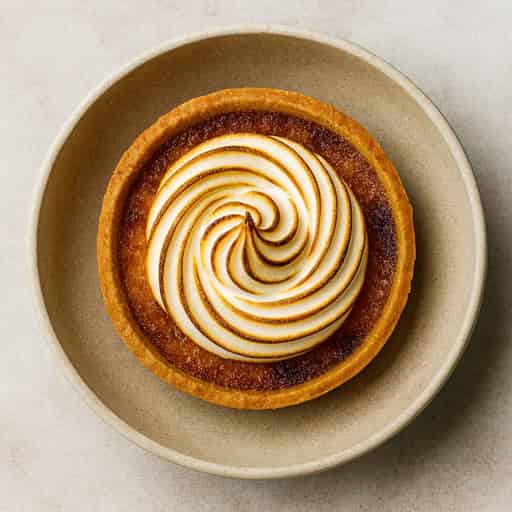
Creole lemon tart with whole lemon filling, brown rum, and Italian meringue for a bittersweet citrus dessert with a refined finish.
Prep time
2 hr
Cook time
30 min
Total time
2 hr 30 min
Servings
6
Chef's Tips
For best texture, make the pastry a day ahead and rest 12–24 hours in the fridge.
Use an unwaxed organic lemon since the whole fruit (peel and pith) is blended.
Chill filled shells briefly before baking to reduce shrinkage.
Torch lightly before unmoulding to enhance the pleasant bitter notes.
This tart contains alcohol; swap rum for juice if serving to children.
Tools Used
We use affiliate links, which may earn us a small commission at no extra cost to you.
Ingredients
Ingredients
Servings
6 servings1×
Scale
Ingredient amounts update instantly.
Sweet Crust Pastry
Sweet–Sour Lemon Cream
Italian Meringue
Instructions
Make the Sweet Crust Pastry
- 1
Cream softened butter with icing sugar just until combined.
- 2
Beat in egg, then fold in sifted flour and almond meal until a smooth dough forms.
- 3
Wrap and refrigerate at least 1 hour (ideally 12–24 hours).
Blend the Sweet–Sour Lemon Cream
- 1
Deseed and roughly chop the washed lemon. Pulse in a food processor until finely pulverised.
- 2
Add sugar and eggs; process smooth. Stream in melted butter, then rum. Chill.
Cook the Italian Meringue
- 1
Heat sugar and water to 113°C. Begin whipping egg whites on high speed.
- 2
When syrup reaches 121°C, stream onto the whipping whites; whisk to thick, glossy peaks. Transfer to a piping bag.
Assemble & Bake
- 1
Roll pastry between sheets to 3 mm. Prick lightly; chill until firm.
- 2
Line 6 small tart moulds; chill 1 hour.
- 3
Fill shells with lemon cream. Bake at 170°C/325°F for ~30 minutes.
- 4
Before removing from oven, lightly torch tops to accentuate gentle bitterness. Cool, unmould.
- 5
Pipe a spiral of Italian meringue and brûlée to caramelise.
Plan This Recipe
Save this recipe to one of your meal plans or browse your existing plans.
Learn More
Everything you want to know about this recipe.
Creole Lemon Tart with Rum Meringue
Creole Lemon Tart with Rum Meringue
Creole lemon tart with rum meringue is a sharper, more layered take on the classic lemon tart. The filling uses the whole lemon rather than just the juice, which gives it bitterness, perfume, and more depth than a standard curd-style version.
The brown rum sits quietly in the background, softening the citrus rather than turning the dessert boozy. Finished with Italian meringue, the tart lands somewhere between bright, bitter, sweet, and lightly toasted.
Why This Recipe Works
Why This Recipe Works
Using the whole lemon changes the flavor profile completely. You get the juice, zest, and some pith together, which makes the filling more aromatic and slightly bittersweet instead of only sharp and sugary.
The sweet crust pastry keeps that filling under control with a crisp, buttery base, while the Italian meringue adds sweetness and a light toasted note. That contrast is what stops the tart from feeling too severe.
Ingredients Overview
Ingredients Overview
The lemon is the defining ingredient here, so it is worth using a good unwaxed or organic fruit since the peel is blended into the filling. Brown rum adds warmth, but it should not dominate.
The almond-based sweet crust pastry gives the tart a more delicate texture than a basic shortcrust, and the Italian meringue helps round out the sharper edges of the lemon cream.
How to Make Creole Lemon Tart
How to Make Creole Lemon Tart
Start with the pastry so it has time to rest properly before rolling. Once the shells are lined and chilled, blend the whole lemon filling until completely smooth and fill the tart moulds.
Bake until the filling is set, then cool the tarts before topping them with Italian meringue. Finish with a light torching so the top caramelises without turning bitter or burnt.
Tips, Variations, and Storage
Tips, Variations, and Storage
Because the whole lemon goes into the filling, make sure to remove the seeds carefully before blending. That one step matters for both flavor and texture.
If you want a less assertive version, replace the rum with orange juice as noted in the FAQ. You can also make one larger tart instead of minis if that fits the occasion better.
These tarts keep well in the fridge for 2 days. For the cleanest finish, add and torch the meringue as close to serving as practical.
Portion Guidance for Goals
Portion Guidance for Goals
One mini tart is a sensible serving because the filling is concentrated and the meringue adds a fair amount of sweetness. If you are serving a larger meal, half a tart can also work as a lighter plated portion.
When to Eat
When to Eat
This tart works best as a dinner-party dessert, an afternoon tea pastry, or a make-ahead citrus dessert when you want something sharper than chocolate or caramel-based options.
Balance Tip
Balance Tip
Serve it cold and pair it with coffee, plain tea, or fresh berries if you want the plate to feel cleaner. The bittersweet lemon filling already brings enough contrast, so it does not need a very sweet accompaniment.
Nutrition Facts
Nutrition Facts
Serving Size: 1 mini tart (1/6 of recipe)
Calories 28014%
% Reference Intake*
Total Fat 12g17%
Saturated Fat 6.5g33%
Trans Fat 0g
Cholesterol 38mg
Sodium 35mg
Total Carbohydrates 40g15%
Dietary Fiber 1g
Sugars 32g36%
Protein 3.5g7%
* Reference intakes are based on an average adult's 8,400 kJ / 2,000 kcal diet. Your needs may be higher or lower.
FAQs
Can I make one large tart instead of six minis?
Yes—use a 20–22 cm tart ring. Blind bake briefly if your pan is not non-stick, then fill and bake until the centre just sets.
How do I make a kid-friendly version?
Replace rum with 1 tbsp lemon or orange juice. The flavour stays bright without alcohol.
Why use the whole lemon?
Blending peel and pith adds aromatic oils and subtle bitterness for a complex, ‘douce-amère’ profile that balances the sweet meringue.
My meringue wept—what happened?
Cook the syrup to 121°C and add it in a thin stream to fully whipping whites. Keep whisking until the bowl is just warm and the meringue is stable.
Community Reviews
See how other home cooks made this recipe, then share your own experience.
4.8
5 ratings
5
80%
4
20%
3
0%
2
0%
1
0%
How would you rate this recipe?
Share your experience and help others.
Nathan
· 14 Jun 2026I was unsure about the rum at first, but it sits in the background and rounds out the citrus nicely. Good dinner-party dessert.
Claire
· 21 Jan 2026The whole lemon filling gave this much more depth than a standard lemon tart. I used six small tins and the balance with the meringue was very good.
Sophie
· 12 Oct 2025Super aromatic. Next time I’ll rest the pastry overnight—the texture improved on day two.
Marco
· 12 Oct 2025Mini format baked perfectly at 170°C. Light torch before unmoulding really boosted the flavour.
Léa
· 12 Oct 2025The bitter-sweet hit is gorgeous. I swapped the rum for orange juice and it was still so complex!
Create Your Own Recipe
Add your personal creations and build your own recipe collection.